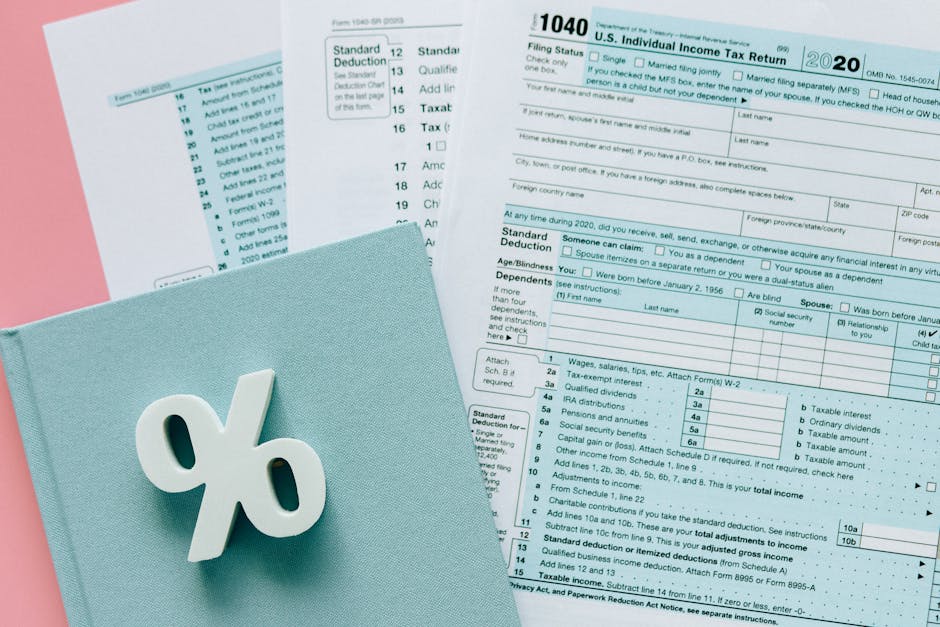
2026 Tax Brackets, Standard Deductions, and Filing Deadlines: Complete Guide for Tax Planning
Planning ahead for 2026 taxes means understanding how brackets shift, what deductions you can claim, and when everything is due. The IRS adjusts figures annually for inflation, and those changes directly affect how much you owe — or keep. This guide breaks down every key number and deadline you need to make smarter tax decisions now.
How 2026 Tax Brackets Work and Why They Matter
The United States uses a progressive federal income tax system, meaning different portions of your income are taxed at different rates. A common misconception is that earning more money pushes all of your income into a higher bracket — that's simply not true. Only the income that falls within each specific range gets taxed at that bracket's rate.
Each year, the IRS applies inflation adjustments to bracket thresholds. This practice, sometimes called "inflation indexing," prevents "bracket creep" — a phenomenon where inflation-driven wage increases push taxpayers into higher brackets even though their real purchasing power hasn't grown.
For 2026, these adjustments are especially relevant given the economic environment of recent years. Understanding exactly where the thresholds fall helps you time income, plan retirement contributions, and structure deductions strategically.
2026 Federal Tax Brackets for Single Filers
The seven federal tax rates remain: 10%, 12%, 22%, 24%, 32%, 35%, and 37%. For single filers in 2026, the thresholds shift upward slightly from 2025 levels. The 10% bracket typically covers income up to roughly $11,925 for single filers, while the 12% bracket extends through approximately $48,475. The 22% rate kicks in after that and runs through the mid-five-figure range, with the top 37% bracket applying to incomes above around $626,350 for single taxpayers.
These numbers are subject to final IRS confirmation, which typically comes in late fall of the prior tax year. You can verify finalized rates directly through the IRS inflation adjustment announcements.
2026 Tax Brackets for Married Filing Jointly
Married couples filing jointly generally benefit from bracket thresholds that are approximately double the single filer amounts. This "marriage bonus" can be significant at middle-income levels. The 37% top bracket for joint filers begins around $751,600 for 2026. Couples sitting near the top of a bracket should run projections — even modest adjustments to pre-tax retirement contributions can shift taxable income to a meaningfully lower rate.
Use a tax bracket calculator to model your exact situation before year-end rather than relying on generic estimates.
Head of Household Filers
Head of household is a favorable filing status available to qualifying single parents and certain other taxpayers who maintain a home for a dependent. The thresholds for this status fall between single and married filing jointly figures, offering better bracket positioning than filing as single. For 2026, the 10% bracket for head of household filers runs to approximately $17,000, providing meaningful relief compared to the single filer threshold.
2026 Standard Deduction Amounts
The standard deduction is the flat dollar amount the IRS lets you subtract from gross income before calculating your tax. It's one of the most impactful numbers in your return because it determines whether itemizing makes sense at all.
For tax year 2026, the standard deduction increases to reflect inflation adjustments:
- Single filers: approximately $15,000
- Married filing jointly: approximately $30,000
- Head of household: approximately $22,500
These figures represent meaningful increases from just a few years ago, largely due to the higher inflation environment that drove IRS adjustment formulas. The practical implication: fewer taxpayers will benefit from itemizing, because their combined deductible expenses — mortgage interest, state taxes, charitable contributions — won't easily exceed these thresholds.
Additional Standard Deduction for Age and Blindness
Taxpayers who are 65 or older, or legally blind, qualify for an additional standard deduction on top of the base amount. For 2026, this additional amount is expected to be around $1,600 per qualifying condition for married filers and approximately $2,000 for single filers and heads of household. If you and a spouse are both over 65, those additional amounts stack — a detail that's easy to overlook but adds up quickly in retirement planning scenarios.
When Itemizing Still Makes Sense in 2026
Despite higher standard deductions, itemizing can still be the right move for certain taxpayers. Homeowners with large mortgage balances, residents of high-tax states (up to the $10,000 SALT cap), and generous charitable donors may find their deductible expenses outpace the standard amount. Run both scenarios each year — itemized versus standard — rather than assuming one approach automatically wins. A dedicated tax deduction calculator makes this comparison quick and straightforward.
Key 2026 Tax Filing Deadlines You Cannot Miss
Missing a tax deadline can trigger penalties, interest charges, and unnecessary stress. The IRS filing calendar for 2026 follows a predictable structure, but there are nuances worth noting — especially if you're self-employed, run a business, or receive income from multiple sources.
Individual Return Deadline: April 15, 2026
The standard deadline for individual federal income tax returns (Form 1040) for tax year 2025 is April 15, 2026. If April 15 falls on a weekend or federal holiday, the deadline shifts to the next business day. Note that this is the deadline to file and to pay any taxes owed. An extension to file is not an extension to pay — if you expect to owe, you still need to submit estimated payment by April 15 to avoid underpayment penalties.
Extension Deadline: October 15, 2026
Filing Form 4868 before April 15 gives you an automatic six-month extension to submit your return, pushing the filing deadline to October 15, 2026. Extensions are freely granted — you don't need to explain why. However, remember that any tax owed was still due in April. Waiting until October to pay will accumulate both penalties and daily interest from April forward.
Estimated Tax Payment Deadlines
Self-employed individuals, freelancers, investors with capital gains, and others without sufficient withholding must make quarterly estimated tax payments. For the 2026 tax year, those payments fall on:
- Q1: April 15, 2026
- Q2: June 16, 2026
- Q3: September 15, 2026
- Q4: January 15, 2027
Underpaying estimated taxes triggers an IRS penalty calculated on the shortfall amount. The IRS generally requires you to pay at least 90% of the current year's tax liability or 100% of the prior year's liability (110% if your prior year AGI exceeded $150,000) to avoid this penalty. See IRS guidance on estimated taxes for complete safe harbor rules.
Strategic Tax Planning Moves for 2026
Knowing the numbers is only half the battle. What you do with that knowledge determines your actual tax outcome. Several planning strategies become more effective when you understand exactly where your income lands relative to bracket thresholds.
Maximize Pre-Tax Retirement Contributions
Contributing to a traditional 401(k), SEP-IRA, or similar pre-tax retirement account directly reduces your adjusted gross income. For 2026, 401(k) contribution limits are expected to be around $23,500 for those under 50, with a catch-up contribution of $7,500 available to those 50 and older. If you're sitting near the top of the 22% bracket, for example, additional pre-tax contributions could shift income into the 12% bracket — a 10-percentage-point rate difference that compounds significantly over time.
Roth Conversion Opportunities
If your income is unusually low in 2026 — perhaps due to a job change, business loss, or early retirement — it may be an ideal time to convert traditional IRA funds to a Roth IRA. You'll pay taxes at today's lower rate, and future growth and qualified withdrawals will be tax-free. The sweet spot is converting enough to fill your current bracket without spilling into the next one.
Charitable Giving Strategies
Donor-advised funds allow you to "bunch" multiple years of charitable contributions into a single tax year, enabling you to itemize that year and capture a larger deduction, then revert to the standard deduction in subsequent years. This strategy is particularly effective for taxpayers whose annual giving wouldn't independently exceed the standard deduction threshold.
Frequently Asked Questions About 2026 Taxes
Will the 2026 tax brackets be higher or lower than 2025?
Due to annual inflation adjustments, the income thresholds for each bracket will be slightly higher in 2026 than in 2025. This means you can earn a bit more before crossing into the next bracket. The actual tax rates — 10%, 12%, 22%, 24%, 32%, 35%, and 37% — remain unchanged; only the income ranges shift upward.
Does the 2026 standard deduction change if I'm self-employed?
The standard deduction itself is the same regardless of employment status. However, self-employed taxpayers can also deduct half of their self-employment tax and the full cost of self-employed health insurance premiums before arriving at adjusted gross income — separate from the standard deduction. These above-the-line deductions reduce your AGI even if you take the standard deduction.
What happens if I miss the April 15, 2026 filing deadline?
If you miss the deadline without filing an extension, the IRS assesses a failure-to-file penalty of 5% of unpaid taxes per month, up to 25%. The failure-to-pay penalty is separate and smaller at 0.5% per month. Filing on time — even if you can't pay immediately — significantly reduces your penalty exposure. If you're owed a refund, there's no penalty for filing late, but you should still file to receive your money.
How do I know if I should itemize or take the standard deduction in 2026?
Add up your potential itemized deductions: mortgage interest, state and local taxes (capped at $10,000), charitable contributions, and qualifying medical expenses above 7.5% of AGI. If that total exceeds your filing status's standard deduction amount, itemizing saves you more. If not, the standard deduction is the simpler and larger choice. Running both scenarios with a tax planning tool takes the guesswork out of the comparison.
Putting It All Together for Smart 2026 Tax Planning
Understanding where the bracket thresholds fall, how much the standard deduction covers, and exactly when payments and filings are due gives you the foundation for genuinely proactive tax planning. The taxpayers who minimize their bill aren't necessarily the ones earning the least — they're the ones who plan earliest and understand the mechanics well enough to make intentional decisions throughout the year rather than scrambling in April.
Use the numbers in this guide as a planning baseline, verify final figures through official IRS announcements as the 2026 tax year progresses, and revisit your withholding and estimated payments any time your income situation changes significantly.